
The Wallet Is Not the Security Boundary: Rethinking Multi-Chain DeFi
Most crypto losses do not begin with a dramatic hack. They begin with a small misunderstanding: a user thinks a transaction is merely moving funds, when it is actually granting permission, calling a contract, or routing assets through several systems at once. That is the counterintuitive problem with multi-chain wallets. More chains can make DeFi easier to reach, but they also increase the number of assumptions a user must verify.
For US users navigating Ethereum and EVM networks, the important question is therefore not simply whether a wallet supports many chains. It is whether the wallet helps a person understand what a transaction will do before signing it. Rabby’s recent positioning as a wallet for Ethereum and EVM chains reflects this broader shift: the useful wallet is becoming less like a digital pocket and more like a transaction interpreter. That change matters because convenience and security are not opposites, but convenience without legibility is dangerous.
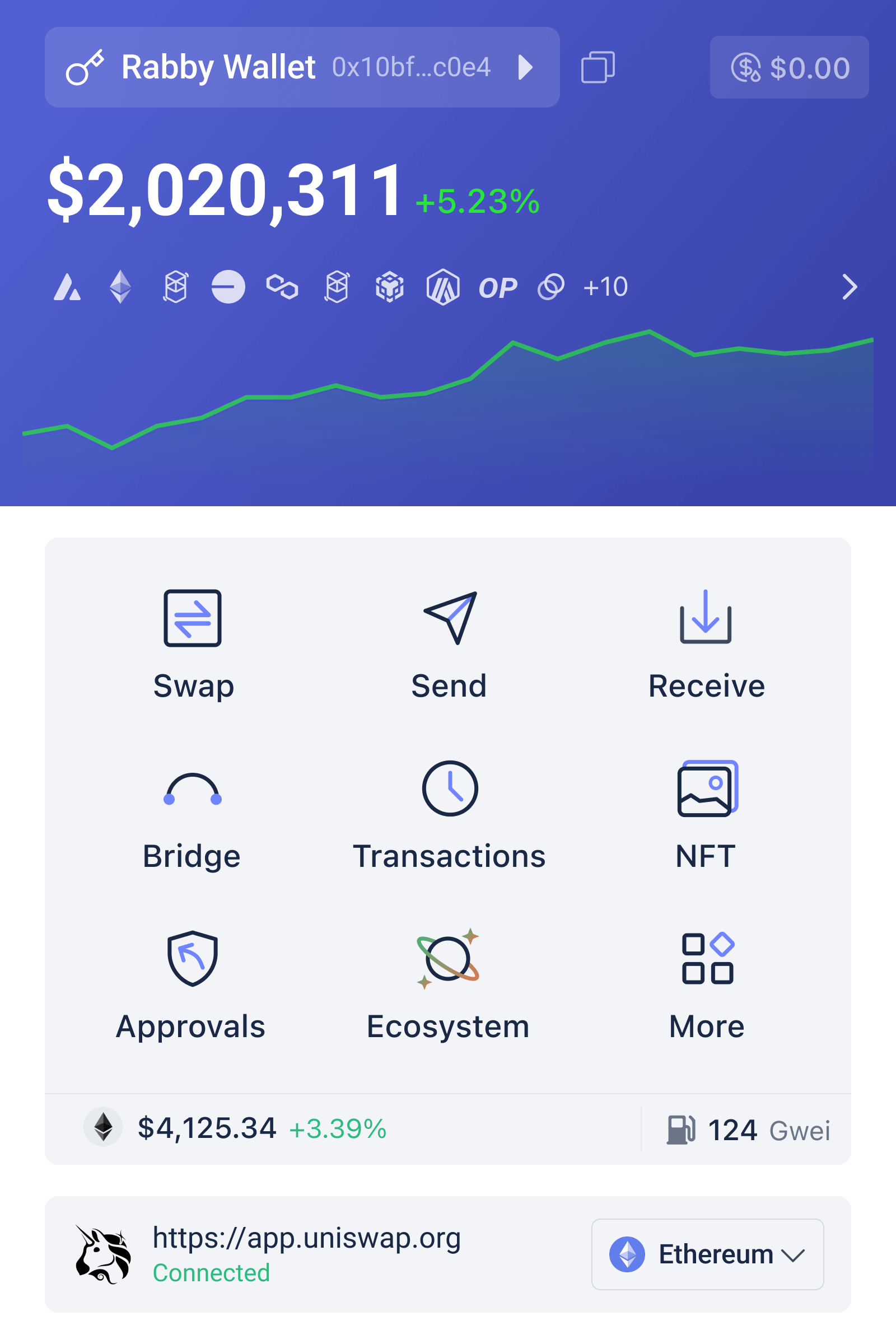
Myth one: a multi-chain wallet is one account with one universal balance
A wallet interface may make several networks look like one portfolio, but the underlying systems remain separate. Ethereum, layer-2 networks, and other EVM-compatible chains can use similar address formats and transaction structures while maintaining different ledgers, validators, fee markets, bridges, and applications. The same address can exist on multiple networks, yet the assets held on one network are not automatically available on another.
This distinction explains a common user error. Someone may see an asset displayed in a wallet and assume it can be spent in any connected application. In reality, the asset’s network is part of its identity. Sending USDC on one chain to an address or service expecting USDC on another can create delays, recovery problems, or permanent loss, depending on the infrastructure involved.
A multi-chain wallet reduces the friction of switching networks, but it does not erase network boundaries. The wallet is an organizing layer above several independent environments. That is powerful, but it also means the user must learn to ask three questions before acting: Which network is this asset on? Which network will the transaction use? And who, or what, is responsible for moving value between them?
Myth two: cross-chain swaps are just ordinary swaps with an extra click
A same-chain swap typically involves a decentralized exchange contract that trades one token for another on a single network. A cross-chain swap is more complicated because the source and destination networks do not share one state. A route may involve a bridge, a liquidity provider, a messaging system, or a combination of these components. The user experiences one intention—“swap this asset for that one”—but the protocol may execute several distinct operations.
That difference creates a useful mental model: a cross-chain transaction is not one action but a chain of obligations. The source-side transaction may approve a token and deposit funds. A bridge or routing system may then transmit a message or arrange liquidity. Finally, a destination-side transaction may deliver an asset or complete a swap. If any stage is delayed, paused, mispriced, or misunderstood, the user’s experience can diverge from the simple interface promise.
This does not make cross-chain swaps inherently unsafe. It means their risk surface is wider. Smart-contract risk, bridge design, liquidity depth, oracle assumptions, destination-chain fees, and recipient compatibility can all matter. A wallet can make these steps easier to inspect, but it cannot remove the underlying dependencies.
What wallet security actually protects
The phrase “wallet security” often suggests that the wallet itself is a vault that can stop every bad outcome. A better definition is narrower: wallet security protects control of the signing keys and helps the user make informed authorization decisions. If a user signs a malicious approval, a secure key-management system may have worked exactly as designed while the application interaction still causes harm.
There are several layers to examine. The first is key custody: whether the private key or seed phrase remains under the user’s control. The second is signing visibility: whether the user can understand the target contract, requested allowance, network, and expected asset movement. The third is operational hygiene: whether the user verifies downloads, avoids fake support channels, protects the seed phrase, and separates long-term holdings from experimental activity.
This is why installing a wallet extension from a trustworthy project path matters, but installation is only the beginning. Users researching a rabby extension download should also verify the source, check the browser’s extension details, and understand that no wallet can recover a seed phrase that has been exposed. A genuine extension does not turn an unsafe signing decision into a safe one.
The approval problem is easy to miss
Token approvals deserve special attention. When a decentralized application asks permission to spend a token, the user may be authorizing more than the amount needed for one trade. Depending on the approval design and interface, that permission can remain active until revoked. A later compromise of the approved contract—or a mistake in how the user interacts with it—can turn an old approval into a present risk.
The practical lesson is not to reject every approval. Approvals are a basic mechanism that lets contracts interact with tokens. The decision is about scope and trust. Before signing, users should ask whether the contract is the intended application, whether the allowance is proportionate, and whether the transaction is taking place on the expected chain. Wallet warnings are valuable signals, not magical guarantees; unfamiliar contracts and unusual permissions deserve a pause rather than an automatic override.
Why transaction simulation changes the user experience
Traditional wallet prompts often expose technical fields: an address, a gas estimate, and a data payload. Those fields are necessary, but they are not always meaningful to a human deciding whether to proceed. Transaction simulation attempts to translate contract behavior into likely outcomes, such as tokens leaving the wallet, assets arriving, permissions changing, or a call failing.
The conceptual improvement is significant. Instead of treating the transaction as a request to sign opaque data, the user can treat it as a proposed state change. What will the wallet look like afterward? Which balances change? Which permissions are added? Is the recipient what the user expects? This is closer to a balance-sheet view of DeFi than to a simple “confirm” button.
Still, simulation has boundaries. It is an estimate based on current state and the assumptions available to the wallet. Market conditions can change, contracts can behave differently under unusual circumstances, and some interactions may be difficult to model completely. A favorable simulation is evidence that a transaction appears consistent with its intended outcome; it is not a guarantee that the protocol, bridge, or destination application is trustworthy.
A practical framework for safer multi-chain use
A reusable safety habit is to separate intent from execution. First state the intended result in plain language: “I want to exchange this amount of one asset for that asset, and I expect the final funds on this particular network.” Then compare the wallet’s proposed transaction with that sentence. If the interface shows an unexpected chain, an unfamiliar token, a broad approval, or an additional recipient, the mismatch is the important information.
- Check the network: confirm both the asset’s current chain and the destination chain.
- Check the route: identify whether the operation uses a swap, bridge, liquidity provider, or several steps.
- Check permissions: distinguish a one-time amount from an unlimited or persistent allowance.
- Check the outcome: review expected assets received, fees, slippage, and possible delays.
- Check the stakes: test unfamiliar routes with a small amount before using meaningful capital.
This framework is especially useful because it does not depend on trusting a single interface. It encourages verification across the wallet, the decentralized application, and the user’s own records. For larger balances, a hardware wallet, a separate low-value testing wallet, and careful address verification can add meaningful layers of defense. None is perfect alone; together they reduce the chance that one mistaken assumption controls the entire outcome.
What changed, and what still has not
Early crypto wallet use often required manually adding networks, copying contract addresses, switching RPC settings, and interpreting raw transaction data. Modern multi-chain wallets have made the experience more coherent by aggregating assets, connecting to more EVM environments, and presenting richer transaction context. The interface has improved because the underlying user problem became clear: decentralized systems can be technically open while remaining cognitively difficult.
But the central trade-off remains. Abstraction removes friction, and friction can be a security signal. When a wallet hides every implementation detail, users may move faster while understanding less. The strongest design direction is not maximum simplicity; it is selective transparency. Routine actions should be easy, while unusual permissions, cross-chain dependencies, and high-value transfers should become more explicit.
Recent emphasis on Ethereum and EVM-wide wallet coverage points toward a future in which users interact with a portfolio rather than a single chain. If that model expands, the most important feature may be the wallet’s ability to explain differences between networks, not merely connect to more of them. Watch for clearer route disclosure, more understandable approval controls, better failure handling, and stronger separation between asset display and actual settlement.
Frequently asked questions
Does a multi-chain wallet make cross-chain transfers risk-free?
No. It can improve network selection, transaction visibility, and user guidance, but cross-chain activity still depends on bridges, liquidity, smart contracts, fees, and destination-chain conditions. The wallet reduces some operational mistakes; it cannot eliminate protocol or market risk.
Is it safe to approve a token-spending request?
An approval can be legitimate and necessary, but users should inspect the application, token, amount, and duration of the permission. Avoid treating an unlimited allowance as a harmless default, especially when interacting with an unfamiliar application.
What is the single best habit for DeFi wallet security?
Before signing, describe the intended result in plain language and compare it with the wallet’s transaction preview. If the expected chain, asset movement, recipient, or permission does not match, stop and investigate rather than relying on speed or familiarity.
The mature view of a multi-chain wallet is neither “it solves security” nor “every cross-chain action is reckless.” It is a decision-support tool operating at the boundary between a human intention and several independent blockchain systems. Used with that mental model, a wallet can make DeFi more navigable without pretending that complexity has disappeared.